We inspect the electrical and fire systems in an existing building, find what is
unsafe or wasting money, and give you a report you can act on.
Low-voltage panel room — a typical audit subject
In plain terms
Most electrical failures give you warning. Somebody has to go and look.
Loose connections heat up before they fail. Overloaded cables run hot. Earthing
degrades quietly over years. None of this is visible from a corridor — but all
of it is measurable.
An audit is a systematic inspection with proper instruments. We check the
installation against the regulations, measure what is actually happening, and
give you a written report with a prioritised list of what to
fix — what is dangerous now, what needs attention this year, and what
is simply costing you money.
Housing societies, hospitals, offices and factories all use these — often
because an insurer, a fire officer or the electrical inspector has asked for one.
01
Four kinds of audit
Choose what you need
01
Electrical Safety Audit
The standard one. Is the installation safe, and does it comply?
Image to be added
Engineer measuring earth resistance and insulation resistance at a low-voltage distribution panel with a digital megger
Where is your electricity actually going, and how much of it is wasted?
We conduct detailed electrical energy audits to analyse power consumption, identify energy losses and optimise system efficiency. Our audits provide actionable insights to reduce energy costs, improve performance and support sustainable operations.
Image to be added
Engineer reviewing power-quality readings on a clamp meter beside a main distribution board, with a laptop showing consumption graphs
Analysis of consumption patterns
Identifying losses in the distribution system
Power factor and demand assessment
Lighting and equipment efficiency review
Costed recommendations with payback estimates
03
Thermography
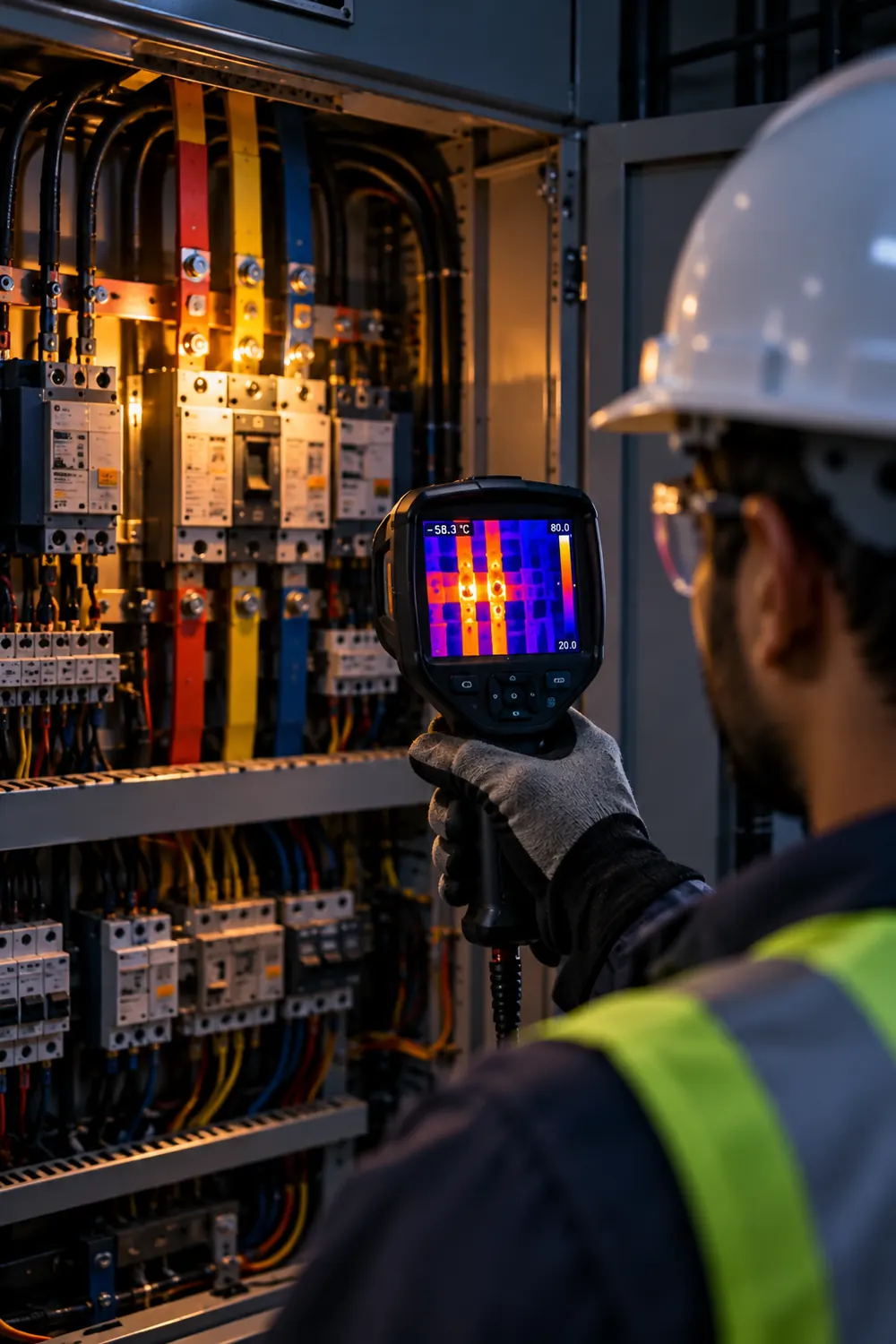
An infrared camera shows heat. A connection about to fail is hotter than the ones beside it — often months before it burns out.
We provide professional infrared thermography inspections to detect abnormal temperature variations in electrical systems and equipment. Our reports identify hidden faults, overheating and potential failure points, enabling preventive maintenance and enhanced operational safety.
Infrared inspection of a live low-voltage panel
Infrared scanning of panels and switchgear under load
Detecting loose or corroded connections
Identifying overloaded and unbalanced circuits
Photographic report with temperature readings
Severity rating for each finding
Non-intrusive — we do not need to shut anything down to carry out the scan.
04
Fire Safety Audit
Would the fire systems work, and would people get out?
Image to be added
Engineer inspecting a fire hydrant valve and sprinkler riser in a building plant room, clipboard in hand
Hydrant, sprinkler and pump system condition
Detection and alarm system testing
Means of escape and evacuation routes
Fire compartmentation and passive protection
Extinguisher provision and servicing records
Emergency preparedness review
Assessed against the National Building Code, NFPA standards and local fire regulations.